Residency & TIE Card in Altea
Full residency application and TIE card service for expats settling on the Costa Blanca.
Securing your legal right to live in Altea often feels like a full-time job you never applied for. While you should be spending your afternoons enjoying the view of the blue-domed church from a terrace in the Old Town, you are instead trapped in a loop of refreshing government websites for appointments that never seem to exist. The Spanish bureaucracy is notorious for its rigidity, and for the 35% of Altea residents who moved here from abroad, the transition from "visitor" to "legal resident" is frequently the most stressful part of the move. You face a system where the rules change between provinces, and even between different officials at the same desk. Missing one specific photocopy or failing to pay a small tax via the correct Modelo form before your appointment can result in an immediate rejection, forcing you to start the months-long cycle all over again.
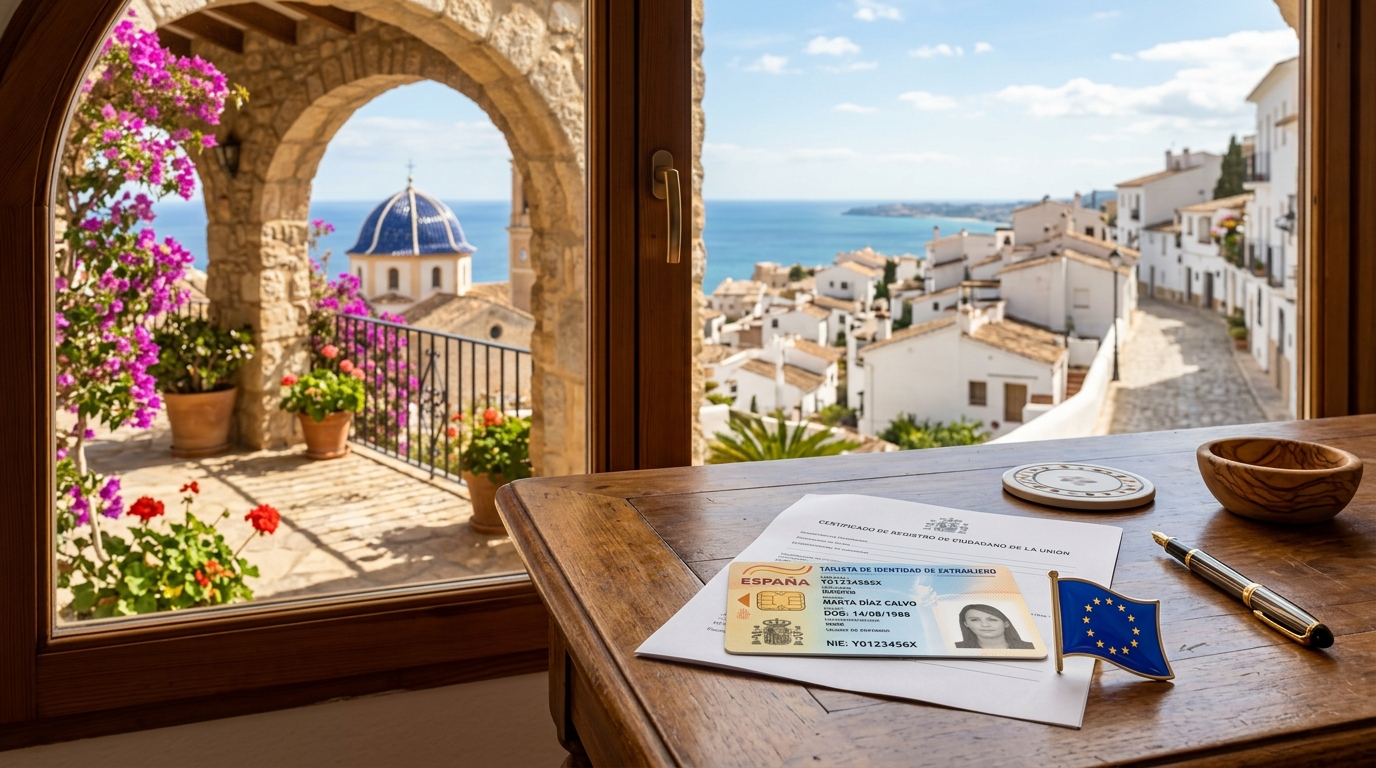
The TIE, or Tarjeta de Identidad de Extranjero, is the biometric card you need to prove your residency status. For British citizens post-Brexit and other non-EU arrivals, the process is a two-stage hurdle. First, you must obtain residency approval from the Extranjería, and second, you must visit a National Police station for fingerprinting. You will need to prove you have sufficient financial means, which is currently calculated based on the IPREM (Public Multiple Effects Income Indicator). For a single applicant, this often requires showing around EUR 28,800 in a bank account or a guaranteed monthly pension. You will also need comprehensive private health insurance with no co-payments, or an S1 form if you are a pensioner. The administrative tax for the card itself, paid via Modelo 790-012, is a modest EUR 16 to EUR 22, but the true cost lies in the professional management of the file. A competent lawyer or gestoría in the Altea area will typically charge between EUR 300 and EUR 600 per person to handle the residency application and secure your appointments.
Timeline expectations are crucial for your planning. Once your initial residency is approved, which can take six to twelve weeks depending on the backlog, you must book a fingerprinting appointment. In the Marina Baixa region, these slots are incredibly scarce. You can expect the entire process, from the first submission to holding the physical TIE card in your hand, to take four to six months. During this time, you must also ensure your Padron—the certificate from the Altea Ayuntamiento—is less than three months old. One common mistake I see is expats failing to update their Padron at the Town Hall in Plaza José María Planelles before their police appointment, leading to a card printed with an outdated address or an outright refusal to process the fingerprints.
In Altea, your residency journey is tied specifically to the National Police station in Benidorm on Calle Apolo XI, or occasionally the office in Denia if Benidorm is fully booked. There is a persistent and illegal "black market" for appointments where scammers use bots to hoard slots and sell them for EUR 50 to EUR 100. Never engage with these services; if the police suspect an appointment was obtained fraudulently, they can cancel it on the spot. Furthermore, as we approach 2026, the Spanish government is tightening the requirements for "Non-Lucrative Visas" and moving toward more digital-based filings. You must also be aware of your future tax obligations once residency is granted. Becoming a resident means you may need to file a Modelo 720 to declare overseas assets over EUR 50,000, and you will shift from paying Non-Resident Income Tax (IRNR) to becoming a full Spanish tax resident.
Navigating this alone is a risk that rarely pays off. At Costa Blanca Habitat, I connect you with vetted, English, German, and Dutch-speaking legal professionals who specialise specifically in the Altea and Sierra de Bernia zone. I have spent years identifying the firms that actually deliver results and weeding out those that overpromise and underperform. The lawyers I recommend understand the specific preferences of the Benidorm and Alicante extranjería offices and will ensure every document, from your health insurance policy to your bank statements, is translated and presented exactly as the officials demand. We provide a bridge to experts who offer a free initial consultation to assess your specific situation without any obligation. Get matched with an Altea residency expert today and ensure your move to the Costa Blanca is built on a solid legal foundation.
Frequently Asked Questions
How much does Residency & TIE Card in Altea cost? ▼
The typical fee for Residency & TIE Card in Altea is EUR 300–600 (lawyer fee). We provide a transparent quote before any commitment.
Do you cover Altea and surrounding areas? ▼
Yes, we connect you with vetted professionals covering Altea and all nearby towns including Calpe, Benidorm, Alfaz del Pi.
How long does Residency & TIE Card take? ▼
Processing times vary, but most Residency & TIE Card cases in the Altea area are completed within 2-8 weeks depending on complexity.
Other Legal Services in Altea
Also Serving Nearby
Get Free Property Management Advice
Tell us about your property and we'll get back to you within 24 hours.